Root rot in houseplants: signs, rescue and prevention
Root rot happens when roots sit in wet soil and run out of air. Spot it early, trim the damage and repot – many plants make a full recovery.
Not sure what’s wrong with yours? Get a free photo diagnosis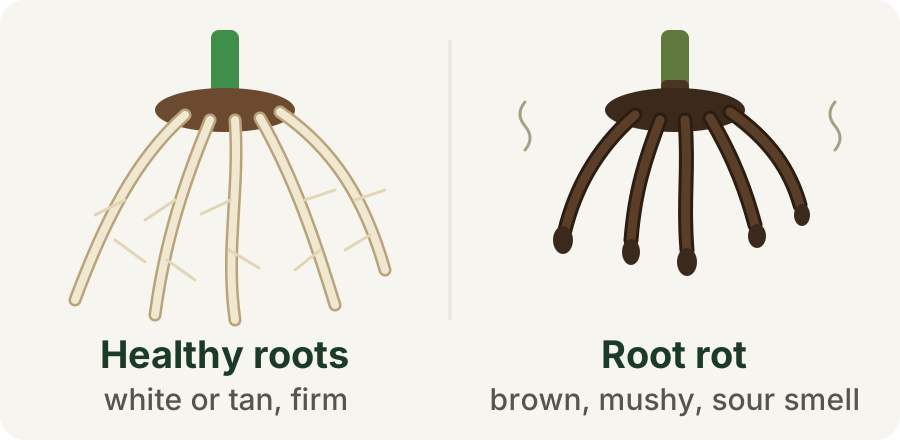
Roots need air. When soil stays soggy, roots suffocate, die and start to rot – and rotten roots cannot drink, so the plant wilts even though it is wet.
Signs
- Drooping or yellowing even though the soil is wet
- Soft, dark stems at the soil line
- A sour or swampy smell from the pot
- Brown or black, mushy roots that pull apart
How to treat it
- Slide the plant out and gently remove the wet soil.
- Cut off every soft, brown root with clean scissors. Keep the white or tan, firm ones.
- If more than half the roots are gone, also trim some leaves so the plant has less to support.
- Repot into fresh, airy mix (add perlite or bark) in a pot with a drainage hole, no bigger than the remaining roots need.
- Water lightly once, then wait until the top few centimetres are dry before watering again.
- Keep it in bright, indirect light and out of drafts while it regrows roots (2–6 weeks).
Prevent it
Water by checking the soil, not by the calendar; always use drainage holes; and choose a pot only slightly larger than the root ball. See also overwatered plant signs.
Unsure if it’s root rot? A photo and three quick answers will tell you. Upload a photo for a free diagnosis →
Quick answers
- Can I use hydrogen peroxide for root rot?
- Some growers rinse trimmed roots in a dilute (about 1 part 3% peroxide to 3 parts water) solution. It is optional – removing rotten roots and repotting into fresh, dry mix is what matters.
- Should I reuse the old pot?
- Yes, but wash it with hot soapy water first, and make sure it has a drainage hole.
Not sure what’s wrong with yours?
Upload a photo, answer 3 questions, get a diagnosis and a 7-day plan. Free.
Diagnose my plant