Why are my plant leaves turning yellow? 7 causes and fixes
Yellow leaves on a houseplant usually mean overwatering, too little light or a pot without drainage. Here is how to tell which one, and what to do this week.
Not sure what’s wrong with yours? Get a free photo diagnosis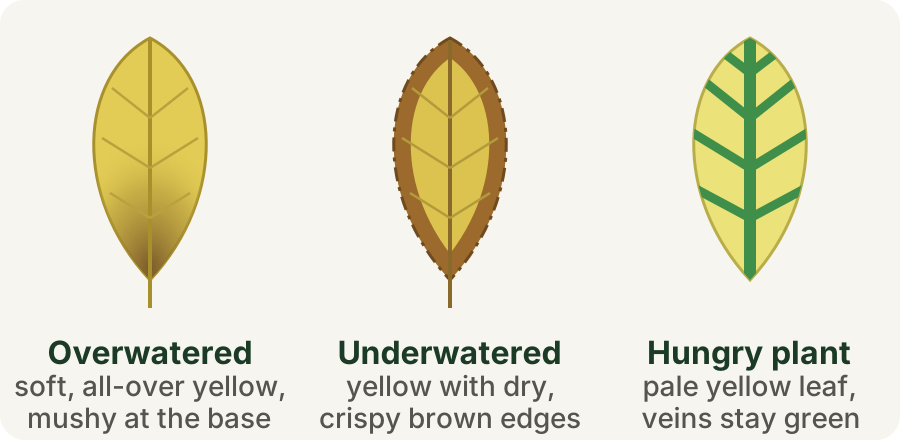
Yellow leaves are the most common way a houseplant tells you something is off. The good news: in most homes the cause is one of a handful of things, and the fix is cheap. Start by looking at which leaves are yellow and how the soil feels.
Read the pattern first
| What you see | Most likely cause |
|---|---|
| Lower leaves yellow, soil still wet days after watering, maybe a musty smell | Overwatering / poor drainage |
| Leaves yellow and crispy, soil pulls away from the pot edge | Underwatering |
| Pale, stretched growth leaning toward the window | Not enough light |
| One or two oldest leaves yellow, rest look great | Normal ageing |
| Yellow patches on the side facing the window | Sunburn |
| New leaves pale yellow with green veins | Nutrient shortage (often iron or magnesium) |
1. Overwatering (the #1 cause)
Roots need air as much as water. When the soil stays soggy, roots suffocate and start to rot, so the plant cannot drink even though it is wet. Leaves go soft and yellow, often starting at the bottom.
- Push a finger 2–3 cm (an inch) into the soil. Only water when it feels dry at that depth.
- Make sure the pot has a drainage hole, and empty the saucer 15 minutes after watering.
- If the soil smells sour or roots are brown and mushy, repot into fresh, dry mix and trim the rotten roots.
2. Underwatering
Leaves yellow, then turn brown and crispy from the edges in. The pot feels light. Give it a slow, thorough soak until water runs out of the bottom, or sit the pot in a bowl of water for 20 minutes.
3. Too little light
Rental flats often have one dim window. A plant that cannot make enough energy drops its older leaves. Move it within a metre or two of the brightest window, out of harsh midday sun. A cheap LED grow bulb in a desk lamp works too.
4. Cold drafts and sudden changes
Radiators, air-con vents and winter windows can yellow leaves in days. Keep tropical plants between about 16–27°C (60–80°F) and away from vents.
5. Hungry plant
If it has been in the same soil for over a year and new leaves are pale, feed it with a balanced houseplant fertiliser at half strength once a month in spring and summer.
6. Pests
Look under leaves for tiny dots, webbing or sticky patches. Spider mites and thrips cause speckled yellowing. Wipe leaves and treat with insecticidal soap weekly for a month.
7. Normal ageing
One old leaf yellowing while the plant keeps pushing new growth is just housekeeping. Remove it and carry on.
Not sure which one it is? PlantRescue looks at your photo and your answers about light, watering and pot, and ranks the likely causes. Upload a photo for a free diagnosis →
Quick answers
- Should I cut off yellow leaves?
- Yes, once a leaf is more than half yellow it will not turn green again. Snip it at the base with clean scissors so the plant stops spending energy on it.
- Can a yellow leaf turn green again?
- Rarely. A leaf that is pale from low light or a lack of nutrients can green up a little, but a fully yellow leaf is finished. Focus on the new growth.
- Is one yellow leaf at the bottom a problem?
- Usually not. Plants shed their oldest, lowest leaves as they grow. Worry when several leaves yellow at once, or when new leaves turn yellow.
Not sure what’s wrong with yours?
Upload a photo, answer 3 questions, get a diagnosis and a 7-day plan. Free.
Diagnose my plant