How to save a dying plant: a calm 7-day rescue plan
A step-by-step plan for reviving a dying houseplant: triage it today, fix the cause, then give it a week of steady care. Most plants can come back.
Not sure what’s wrong with yours? Get a free photo diagnosis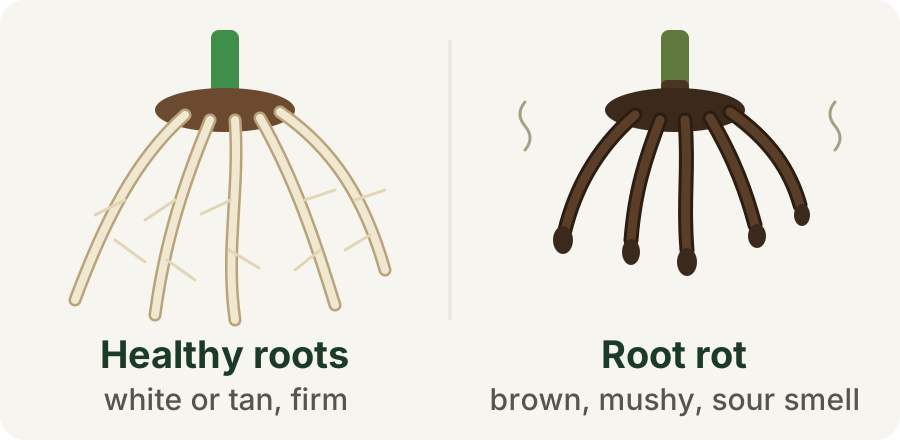
A plant that looks like it is dying is usually reacting to one problem, often water, light or the pot. The worst thing you can do is change everything at once. Here is a calm plan.
Day 1: triage
- Scratch a stem: green underneath means it is alive.
- Check the soil moisture and the roots (see overwatered plant signs).
- Remove leaves that are fully brown or mushy, so you can see what is healthy.
- Move it to bright, indirect light, away from heaters and vents.
Day 2: fix the cause
- Soggy, rotten roots: trim and repot into fresh dry soil in a pot with a drainage hole.
- Bone-dry soil: soak from the bottom for 30 minutes and drain.
- Roots circling the pot: move up one pot size (2–5 cm wider).
- Pests: rinse leaves in the shower, then treat with insecticidal soap.
Days 3–7: steady, boring care
Recovery happens slowly. Check the soil daily with a finger but only water when the top few centimetres are dry. Don’t fertilise, don’t move it around, and don’t repot again. You are waiting for one thing: new growth at the tips or centre.
When to give up (or start again)
If every stem is soft and brown and no roots are firm, take cuttings from any healthy piece. Pothos, philodendron, monstera, tradescantia and many succulents root easily in a glass of water.
PlantRescue builds this plan around your plant and its problem, with a checklist you can tick off and calendar reminders. Upload a photo for a free diagnosis →
Quick answers
- How do I know if my plant is dead or just dormant?
- Scratch a stem gently with a fingernail. Green and moist underneath means it is alive. Check the roots too: any firm white roots mean there is hope.
- Should I fertilise a dying plant?
- No. Fertiliser stresses weak roots. Wait until you see healthy new growth, then feed lightly.
- Should I repot a dying plant?
- Only if the roots are rotting, the soil stays soggy, or the plant is badly root-bound. Otherwise repotting adds stress.
Not sure what’s wrong with yours?
Upload a photo, answer 3 questions, get a diagnosis and a 7-day plan. Free.
Diagnose my plant